
TL;DR
Find out whether running Google Ads can improve organic SEO rankings, how paid traffic supports keyword testing, conversions, brand visibility, and local SEO strategy.
Google Ads vs. Organic SEO in 2026
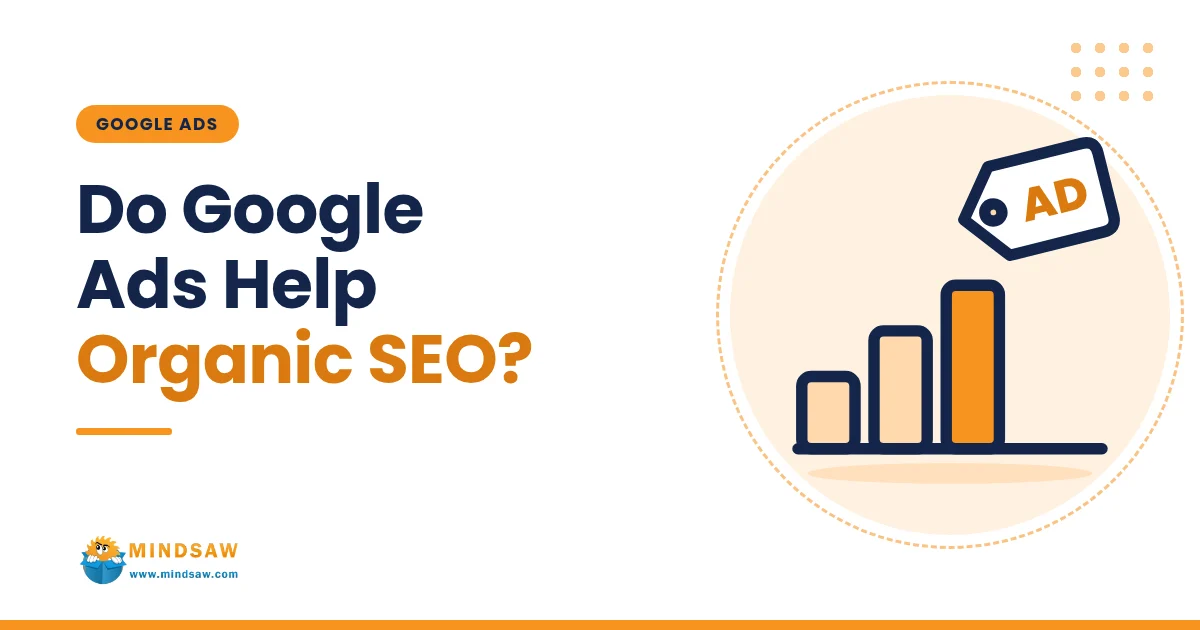
Many business owners still ask: does running Google Ads help improve my organic seo rankings? The short answer is no. Google Ads can put your business above the organic results quickly, but it does not tell Google to rank web pages higher in organic search results.
Organic SEO is the work of earning visibility in unpaid search results through search engine optimization, content quality, technical seo, authority, and user experience. Google Ads is Google’s paid search and advertising platform. Paid search results appear above organic results on SERPs, especially on mobile screens, which is why the confusion is so common.
Google’s public guidance and industry reviews confirm that ads do not directly influence organic ranking algorithms. The relationship is mostly indirect: better data, stronger brand awareness, improved landing page testing, and smarter seo strategy decisions.
Google Ads do not directly improve SEO rankings, and running Google Ads does not directly increase rankings in organic search on Google as of 2026.
What Is Organic SEO and How Does Google Rank Pages?
Organic SEO is the process of improving web pages so they appear in unpaid google search results.
Search engines rely on many signals to rank content, including relevance, content quality, backlinks, mobile friendliness, page speed, internal links, engagement signals, structured data, title tag relevance, and natural language matching.
Here’s how search engines work in simple terms: Googlebot performs search engine crawling, discovers relevant pages, indexes them in Google’s database, and then ranking systems decide which pages deserve to appear in search engine results pages.
Organic search accounts for a major share of site traffic.
Google uses hundreds of ranking signals to evaluate pages.
Mobile-friendly websites matter because mobile search is dominant.
Long-form content ranks better for competitive topics because it often answers search intent in more depth. Mobile optimization is also critical, especially for local SEO, Google Business Profile visibility, ecommerce traffic, reviews, and location relevance.
What Are Google Ads and How Do They Work?
Google Ads is Google’s advertising platform for search, Display, YouTube, Shopping, Performance Max, and other placements. In search campaigns, advertisers bid on keywords, pay per click, and show ads above or below organic search results.
Ad Rank determines paid search placement. It is influenced by bid amount, Quality Score, expected click-through rate, landing page experience, and ad assets.
The Quality Score metric for Google Ads considers page speed and user experience. That matters for paid campaigns, but ad spend only influences paid search placement. It does not improve domain authority or organic seo inside Google’s ranking systems.
Google Ads provides immediate visibility, which makes it useful for new launches, testing offers, and filling gaps while SEO ramps up. The tradeoff is that Google Ads requires continuous payment for traffic generation.
| Google Ads factor | What it affects |
|---|---|
| Bid amount | How much you are willing to pay |
| Quality Score | Expected relevance and usefulness |
| Expected click-through rate | How likely users are to click |
| Landing page experience | Whether the page matches the query |
| Ad assets and formats | Extra links, calls, locations, and details |
Do Google Ads Directly Improve Organic SEO Rankings?
No. Google Ads do not directly improve organic SEO rankings on Google, Bing, or other major search engines. Google Ads do not directly improve SEO rankings, and paying more will not make your content rank higher in organic search.
Google has repeatedly said that paid and organic systems are separate. Search Engine Journal’s review of this topic summarizes Google’s long-standing position that Google Ads are not an organic ranking factor.
The only overlap is that paid and organic visitors may land on the same site. Google can observe user behavior on pages, and weak engagement signals can create SEO concerns over time.
If rankings seem to improve after ads begin, the cause is usually not an algorithmic boost. Ads can drive more direct or branded searches, which may improve organic click behavior without changing the core ranking algorithm.
How Google Ads Can Indirectly Help Your Organic SEO
Google Ads does not buy rankings, but it can act like a fast testing lab for search engine optimization. SEO tools typically rely on historical estimates while Google Ads provides immediate data from real users search behavior.
Google Ads data helps identify high-converting search queries. You can use the Search Terms report to find the right keywords, long-tail phrases, and language actual potential customers use when searching.
Using Google Ads allows for immediate feedback on ad copy performance. If one headline gets a stronger click through rate, you can adapt that phrasing into a title tag, meta description, H1, or landing page section.
Google Ads can increase brand familiarity, aiding organic click-through rates. Google Ads can also help generate backlinks by exposing content to industry professionals.
Better keyword research from real search terms and conversion data.
Faster message testing through ad copy, headlines, and offers.
More brand familiarity, which may support organic click-through behavior.
Example
If “project management software for agencies” converts better than “project management features,” your content creation plan should prioritize the first topic.
Ways Poorly Managed Google Ads Can Hurt Organic SEO Signals
Ads do not change the algorithm, but paid traffic can negatively impact organic performance if mismanaged. The risk is highest when you send low-intent visitors to pages that also target organic search.
If the wrong audience lands on an important page, you may see high bounce rate, very short sessions, poor conversion rate, low scroll depth, and weak engagement signals. That can make a page look less helpful than it really is.
A common mistake is sending all Google Ads traffic to the homepage. A generic page rarely matches specific search intent, so users leave. Sending ad traffic to relevant landing pages improves engagement and keeps data cleaner.
Thin, duplicated, or slow “ad-only” pages can also hurt. If those pages are indexed, they become part of your site and may weaken perceived content quality. Use noindex where appropriate, improve page speed, and keep every landing page useful.
Best Practices to Run Google Ads Without Damaging SEO
Use this checklist to align paid search with organic search. Set up Google Analytics 4 and Google Ads conversion tracking before increasing ad spend. Also monitor google search console so you can compare organic search queries, impressions, and search results performance against paid data.
- Build dedicated landing pages that match ad keywords and user intent.
- Keep every landing page fast, mobile friendly, and easy to use.
- Add unique copy, proof, FAQs, internal links, and clear calls to action.
- Use negative keywords to avoid irrelevant traffic.
- Exclude informational SEO pages from paid campaigns if ad visitors consistently underperform.
- Monitor bounce rate, session quality, and conversions in GA4.
- Fix technical issues such as broken links, slow templates, and poor site structure.
- Use structured data where it helps search engines understand the page.
For page speed checks, use tools like PageSpeed Insights before sending large paid traffic volumes to important pages.
How to Use Google Ads Data to Strengthen Your SEO Strategy
Ad data can shortcut months of trial and error in organic SEO keyword research. Instead of guessing what users want, you can see which queries, locations, devices, and messages already produce quality leads.
Search terms reports often reveal natural language questions that make great FAQ sections, blog posts, and long-tail pages. If many users search “best accounting software for contractors,” that phrase may deserve a comparison article, not just a product page.
Device and location data can also guide local seo. If mobile visitors convert well in one city, create stronger local pages, improve mobile optimization, and make sure calls, maps, and forms work perfectly.
The best seo tools are the ones that combine paid, organic, and technical signals. Use Google Keyword Planner for early ideas, Google Search Console for organic search results data, GA4 for behavior, and dedicated seo tools for rank tracking, content gaps, and technical audits.
Export top-performing search terms from Google Ads.
Group them by search intent.
Compare them with google search console queries.
Build content briefs around terms that convert.
Use seo tools to evaluate difficulty, competitors, and related topics.
Optimize content using proven ad language.
Track whether organic rankings, impressions, and traffic improve.
When to Prioritize Google Ads, SEO, or Both
Budget, timeline, and competition decide how much to invest in paid search versus organic seo.
Use Google Ads first when:
- A site is brand new
- A product launch needs traffic now
- Seasonal offers have a short window
- Competitive keywords are too hard to rank for quickly
- You need immediate feedback before content creation
Focus on SEO when:
- You want consistent traffic over time
- You need to build authority
- You are targeting informational or comparison-stage queries
- CPCs are too expensive
- Your marketing goals depend on long-term search visibility
The best approach is often hybrid. Run ads for high-value commercial queries while you optimize content for supporting informational searches. Think of ads as acceleration and SEO as compounding value.
Frequently Asked Questions
Will turning off Google Ads make my organic rankings drop?
No. Turning off ads does not automatically cause organic rankings to drop because Google’s organic algorithm does not depend on current ad spend.
Your total traffic may fall because paid clicks disappear. Brand visibility may also decline, which can reduce total conversions. But your organic positions should remain stable unless other SEO factors change.
If it looks like rankings dropped, check whether the lost visits were actually paid clicks that previously appeared above organic results.
Can Google Ads help new pages get indexed faster?
Not directly. Paying for ads does not guarantee faster indexing. Crawling depends on factors such as site authority, XML sitemaps, internal links, and crawl accessibility.
Ads may indirectly help if more users visit, share, or link to the new URL. But for reliable indexing, use Google Search Console’s indexing tools, add internal links from important pages, and submit updated sitemaps.
Should I use the same keywords for Google Ads and my SEO strategy?
Yes, but not for every keyword. Transactional keywords often belong in both paid search and organic SEO because they attract buyers.
Use SEO for broader informational and long-tail queries that may be too expensive or too early-stage for ads. Use negative keywords in Google Ads when a query is better served by organic content instead of paid traffic.
Do I need separate landing pages for ads and organic search?
Separate pages are not mandatory, but they are often helpful. Ad landing pages can focus on one offer, one audience, and one conversion action.
Evergreen SEO pages should usually be more comprehensive. They should answer questions, build trust, and help search engines understand the topic. Any ad landing page should still meet SEO quality standards in case it gets crawled and indexed.
What are the best SEO tools to use alongside Google Ads?
Use google search console for organic queries, GA4 for engagement, Google Keyword Planner for paid keyword ideas, and technical seo crawlers for audits.
Also check page speed, mobile friendliness, crawl errors, broken links, title tag issues, and structured data. The goal is simple: use paid data to make better SEO decisions, then use SEO to create traffic that keeps working after the ads stop.
Work with Mindsaw on Google Ads
At Mindsaw, we understand the powerful role that Google Ads plays in boosting your online presence quickly and effectively. While Google Ads do not directly improve your organic SEO rankings, they offer invaluable insights and immediate visibility that can complement your SEO strategy perfectly.
We set up ad campaigns that line up with your SEO goals, driving qualified traffic to the right landing pages and enhancing brand familiarity. To talk it through, call us at (718) 227-2300 or fill out our contact form to get started.
Disclaimer: This article provides general information and does not guarantee specific SEO outcomes. SEO strategies can differ based on individual business needs. For personalized guidance, please consult a professional. Mindsaw is not liable for any results.
Read Why Is AEO Becoming Essential for Modern Digital Marketing?
More from Mindsaw: Local SEO Services: How to Turn Local Searchers Into Customers in 2026 · All articles on the Mindsaw blog